Maya
The Glass Bead GameMaya is the recognition that lived experience can appear substantial and final while remaining an illusion. In Dasa’s story, the yogi first names Maya in response to Dasa’s anguished account of love, violence, and flight; later, a water-fetching errand becomes the setting for an ordeal in which years of imagined life collapse into moments. The lesson does not erase what Dasa has experienced: memory persists, and the suffering remains meaningful even after its apparent world is overturned.
The Name and Its First Meaning
Dasa comes to the forest seeking peace after a life he describes to the yogi as a chain of reversals: born a prince but cast out, raised among herdsmen, and later married to Pravati, whom he believed loved him. When the Rajah takes Pravati, Dasa kills him and becomes a fugitive. He tells the yogi that he can no longer endure his life and wants it to end. The yogi listens, studies his face, and laughs, answering only with the word Maya. His response leaves Dasa uncertain whether the laughter is compassionate or dismissive, an invitation or a rebuke.
That uncertainty makes the word work on Dasa rather than settle his pain. Through the night he turns it over: perhaps his youth, Pravati, love, happiness, and misery are all Maya, a spectacle that appears vivid but is not to be taken as ultimate reality. He can partly understand the yogi’s distance from such events, but he cannot yet share it. The life that he would like to regard as illusion still holds him with its attachments and consequences.
The Lesson in the Water Errand
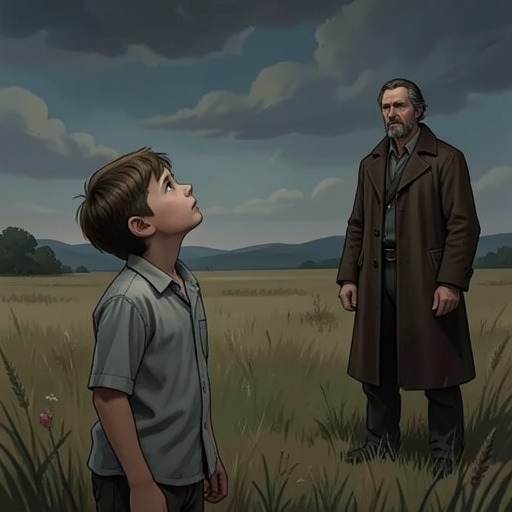
Dasa decides to leave, but before going he asks the yogi to teach him more about Maya. The yogi does not answer with an explanation. He directs Dasa to wash his hands and sends him to fetch water in a gourd. Dasa goes to the spring, where he sees his own face reflected in the water. The ordinary errand becomes the frame for a radically different life: when he returns to awareness, he is standing in the forest with the filled gourd, and the yogi’s hut is nearby.
In the intervening experience, Dasa has been a ruler and father. He has known the cares of sovereignty, love for Pravati, war, jealousy, and the loss of his wife and son. Now he understands that he had neither been a rajah nor lost a family in that life. The palace, the conflict, and the grief belong to Maya. Yet Dasa cannot call them simply nothing. He still remembers Pravati and their child, and the memories retain their power even as the world that seemed to contain them disappears.
What the Revelation Changes
The collapse of that life is both an intellectual recognition and an emotional shock. Dasa stands trembling, and water spills from the gourd onto his feet. The story measures the change through this small object: the gourd has returned him to the original errand, while the spilled water registers how completely his sense of reality has been disturbed. The years he believed he had lived have been compressed into a brief interval, but their joys and sorrows have not become emotionally weightless.
Dasa wonders whether the forest, the spring, and his present awakening might also be Maya, and whether future experience will differ in kind. The revelation offers no secure standpoint outside the cycle of appearances. At first he responds by wanting to extinguish experience altogether: he no longer desires a wife, child, throne, victory, or revenge, but longs for an end to turmoil. The insight has loosened his attachments without immediately giving him peace. Even the thought of death seems only a pause before life’s movement resumes.
Service and Discipleship
Dasa’s next turn comes when he remembers that the yogi has asked him to bring water. He decides that obeying and serving is better than remaining absorbed in thoughts of self-destruction. He empties the gourd, fills it again, and carries out the task. The choice does not undo the revelation; it gives Dasa a practical way to respond to it. Where he had pursued power, revenge, and an end to experience, he now accepts a humble assignment.
The yogi receives him with a look that combines compassion and amusement, recognizing both the young man who has just gone to fetch water and the disciple who has passed through what seemed to him an entire life. The errand has lasted only minutes in the forest, yet Dasa has experienced a kingdom, family, conflict, and bereavement. In that look, the relation between master and disciple comes into being: the yogi accepts him, and the fruitless thoughts give way to discipline and service. Dasa never again leaves the forest.
Meaning and Narrative Form
Maya in Dasa’s story is not merely the claim that appearances are false. The imagined life is exposed as an illusion, but its remembered images survive; Dasa’s grief does not vanish just because the events belong to Maya. The episode holds unreality and consequence together, making the lesson more severe than a simple dismissal of worldly experience. What seems temporary can still wound, delight, and shape the person who undergoes it.
The teaching is enacted rather than explained. The yogi’s single word first leaves Dasa puzzled; the water errand then turns that puzzle into experience, and the gourd brings him back to the forest at the moment of recognition. The reversal changes Dasa’s relation to desire and authority, but not through a direct doctrine or a promise that life will cease to trouble him. Its immediate outcome is service: after confronting the possibility that every experienced world may be illusion, he returns to the task he was given and enters the discipline of a disciple.